

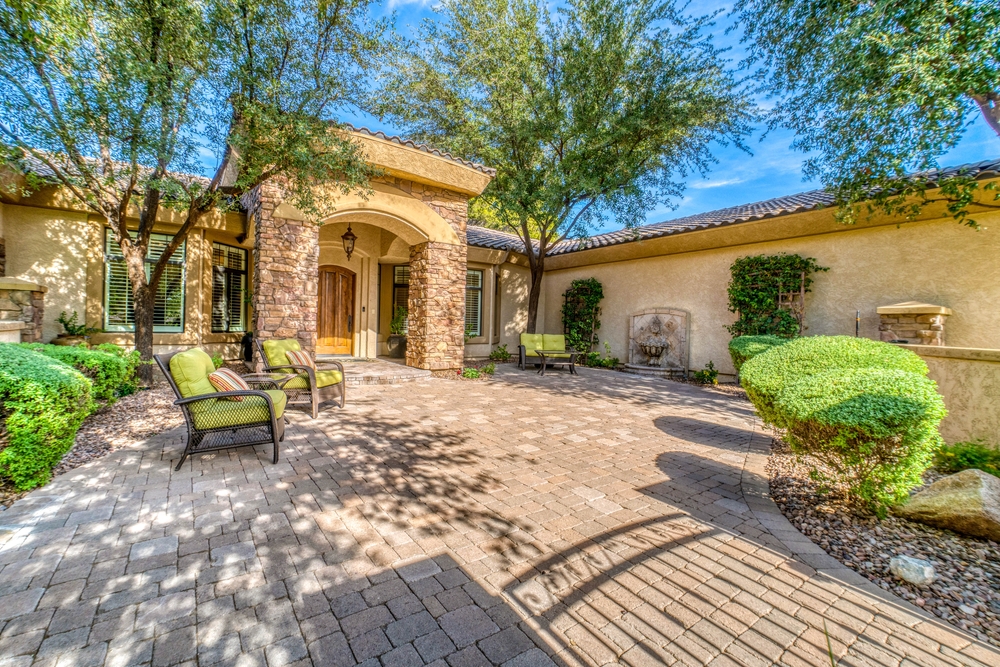
A luxury home sitting empty during an Arizona summer is not truly unattended just because the doors are locked and the alarm is armed. In Scottsdale, prolonged heat can keep an HVAC system working for hours each day, and a cooling failure may go unnoticed until indoor temperatures have climbed significantly.
For absentee estate owners, that creates a property-management problem as much as an HVAC problem. Furnishings, electronics, wine storage, plumbing components, finishes, plants, and other temperature-sensitive features may all be affected when a vacant residence loses cooling.
Quick answer: A summer HVAC failure at an unoccupied Scottsdale estate can expose the property to excessive indoor heat, secondary moisture problems, damaged contents, and a more complicated repair response. Remote thermostat monitoring helps, but technology alone cannot diagnose every problem. A local property check provides the physical verification needed to determine what is actually happening inside the home.
What local estate owners should know
-
A thermostat alert can indicate an abnormal temperature, but someone may still need to physically inspect the property and determine what caused it.
-
North Scottsdale estates can be particularly challenging to manage remotely because large homes may have multiple HVAC zones and extensive mechanical systems.
-
Monsoon conditions can add another layer of concern when HVAC problems occur alongside power interruptions, wind, dust, or water intrusion.
-
Scheduled property checks can identify warning signs that an app or security system may not detect.
-
Having local service contacts and property access arrangements established before summer can reduce delays when a problem develops.
Why Is HVAC Failure a Serious Risk for an Unoccupied Scottsdale Estate?
HVAC failure is a serious risk for an unoccupied Scottsdale estate because summer cooling is responsible for controlling indoor conditions while nobody is there to notice a sudden change. The longer a cooling problem remains undiscovered, the greater the opportunity for heat and related problems to affect the residence.
This concern is especially relevant across communities such as DC Ranch, McDowell Mountain Ranch, Gainey Ranch, Troon North, Desert Mountain, and Scottsdale Ranch. The City of Scottsdale identifies several of these areas among the master-planned communities that shaped local development.
Elite Pro Concierge understands that absentee ownership requires more than waiting for a homeowner to receive an alert from hundreds or thousands of miles away. We help provide the local eyes and presence needed when a property requires attention.
What Does Local Data Tell Estate Owners About Summer Cooling?
Local energy data shows just how heavily Arizona homes can depend on air conditioning during extreme summer conditions. APS states that air conditioning can account for more than three quarters of energy use in a typical central or southern Arizona home during hot summer months, illustrating how central cooling is to maintaining indoor conditions.
The strain is not theoretical. APS reported a new all-time system peak of 9,164 megawatts on August 2, 2026 as record-setting heat affected Arizona and surrounding states.
For an absentee owner, the practical lesson is simple. Cooling should be treated as a monitored property system rather than something that can be switched on and forgotten for the season.
How Can HVAC Failure Affect an Unoccupied Luxury Home?
An HVAC failure can affect an unoccupied luxury home by allowing indoor temperatures to rise while delaying discovery of related mechanical, electrical, or moisture problems. A larger residence can make that situation harder to evaluate remotely because different rooms and HVAC zones may behave differently.
Potential concerns include heat exposure for artwork, electronics, cabinetry, furnishings, stored wine, medications, plants, and other sensitive contents. Owners may also face an inconvenient return to an overheated property or need to coordinate contractors while they remain out of state.
The important issue is not assuming that every failure causes damage. It is recognizing that an empty property gives problems more time to develop unnoticed.
What Warning Signs Can Point to an HVAC Problem?
HVAC warning signs at a vacant estate include abnormal thermostat readings, unusual energy use, system alerts, water near equipment, and rooms that are noticeably warmer than expected. Remote monitoring can identify some of these conditions, while others require somebody to enter the property and inspect it.
Watch for:
-
Indoor temperatures rising despite normal thermostat settings
-
Repeated smart thermostat warnings or connectivity problems
-
One HVAC zone reading substantially warmer than another
-
Unexpected changes in electrical consumption
-
Water or staining near an air handler or drain line
-
Unusual noises or odors when the system operates
-
Weak airflow from vents
-
A system repeatedly cycling or failing to reach its set temperature
A disconnected thermostat should also be investigated rather than automatically treated as an HVAC failure. The problem could involve internet service, electrical power, the thermostat itself, or the cooling equipment.
When Should an Absentee Owner Call a Professional?
An absentee owner should arrange professional HVAC service when the cooling system stops operating normally, cannot maintain the intended temperature, leaks water, repeatedly shuts down, or shows another mechanical or electrical fault. A local property representative can help verify conditions and provide access, but HVAC diagnosis and repair belong with qualified service professionals.
This distinction matters during a Sonoran Desert summer. A property check can establish whether the house is cooling, whether water is present, whether breakers or obvious controls appear abnormal, and whether another immediate concern is visible.
The HVAC contractor can then diagnose and repair the equipment itself.
What Commonly Causes Summer Cooling Problems?
Summer cooling problems can result from equipment faults, restricted airflow, drainage problems, electrical issues, thermostat failures, or the sustained workload associated with extreme Arizona heat. Dust and monsoon-season conditions can also make regular observation and maintenance especially valuable for local estates.
APS recommends having an air conditioner serviced at least annually and changing filters monthly to help the system operate efficiently.
For seasonal residents, maintenance planning is particularly useful before a long absence. It is much easier to address a developing problem while the owner is still in town than to coordinate the entire response remotely.
How Can Estate Owners Reduce HVAC Risk Before Leaving?
Estate owners can reduce HVAC risk by combining preventive HVAC service, remote temperature monitoring, current emergency contacts, and scheduled physical property checks. No single safeguard provides complete visibility, so layered oversight is generally more useful for a residence that will remain empty through the hottest part of the year.
Before leaving, owners can:
-
Schedule appropriate HVAC maintenance.
-
Replace or inspect filters as recommended for the system.
-
Test smart thermostats and temperature alerts.
-
Confirm that remote monitoring is connected and accessible.
-
Establish who is authorized to enter the property.
-
Keep HVAC and other service-provider information readily available.
-
Arrange recurring interior property checks.
-
Document special instructions for multiple HVAC zones, wine rooms, garages, guest houses, or other sensitive spaces.
APS also advises customers leaving home for longer than a day that summer thermostat settings can be raised as high as 85 degrees to save energy, with cooling restarted before returning. Individual estates may require different settings based on their contents and systems.
What Should Owners Expect From Local Property Oversight?
Local property oversight should provide physical verification of conditions that remote technology cannot fully explain. When a thermostat reports an abnormal temperature, an on-site check can help determine whether the concern appears isolated to the thermostat or whether the residence shows signs of an actual cooling problem.
The goal is early awareness and organized response, not a guarantee that equipment will never fail.
A well-prepared absentee owner also has clear instructions for escalation. That can include who should be contacted, which contractors may be given access, and when the owner wants immediate notification.
What Mistakes Increase the Risk for Seasonal Homeowners?
The most common mistakes involve relying on a single monitoring system, delaying maintenance, or failing to establish a local response plan before leaving the Valley. Each mistake can increase the time between the beginning of a problem and somebody physically investigating it.
Mistake: Assuming a smart thermostat provides complete protection.
Consequence: It may report a temperature problem without revealing the cause.
Better approach: Pair remote monitoring with reliable local access and physical checks.
Mistake: Waiting until peak summer for routine HVAC attention.
Consequence: An owner may need to coordinate service after a problem has already developed.
Better approach: Address maintenance before an extended seasonal absence.
Mistake: Leaving no clear authorization or contractor information.
Consequence: A local contact may identify a problem but lose valuable time determining how to respond.
Better approach: Establish an escalation plan before departure.
What Does a Common Local HVAC Scenario Look Like?
A common local scenario begins when an absentee owner notices that a smart thermostat is reporting an unexpectedly high indoor temperature. This is an illustrative Scottsdale scenario, not a client case study.
Imagine an owner has left a residence near the McDowell Mountains for several months. A thermostat notification indicates that one zone is warming while the owner is out of state.
Instead of trying to determine the cause remotely, the owner has a local property contact inspect the residence. That visit can verify actual indoor conditions, look for water or other visible problems, check whether other zones are operating, and determine whether an HVAC contractor should be contacted.
The advantage is not merely receiving an alert. It is having a response plan after the alert arrives.
What Property Services Can Help Reduce This Risk?
Property watch and home concierge services can reduce the practical risks of absentee ownership by providing recurring checks, local coordination, and an established response process when something appears wrong. These services complement HVAC maintenance rather than replacing licensed HVAC diagnosis or repair.
Our role can help bridge the distance between an owner and a Scottsdale residence when the owner cannot personally inspect a thermostat alert, unexpected condition, or service need.
How Do Remote Monitoring and Physical Property Checks Compare?
Remote monitoring provides fast notifications, while physical property checks provide context that sensors cannot always supply. For many seasonal estate owners, these approaches work best together rather than as substitutes.
A smart thermostat may tell you that the temperature is rising. An on-site check can determine whether the house actually feels unusually warm, whether another HVAC zone is working, whether visible water is present, and whether professional service needs to be coordinated.
For a large North Scottsdale residence, combining technology with human oversight creates a more complete picture of property conditions.
Where Is Absentee Estate Oversight Most Relevant Locally?
Absentee estate oversight is relevant throughout Scottsdale and surrounding luxury residential areas where owners may spend extended periods away from Arizona. That includes communities such as DC Ranch, Gainey Ranch, McDowell Mountain Ranch, Troon North, Desert Mountain, and Scottsdale Ranch.
The need is driven less by a particular ZIP code than by the combination of extended absence, summer heat, complex property systems, and the value owners place on prompt awareness when conditions change.
What Can Waiting Cost an Absentee Property Owner?
Waiting can turn a manageable HVAC service issue into a more complicated property problem because an unoccupied home has nobody present to notice changing conditions. The actual consequences depend on the equipment failure, indoor temperature, duration, property contents, and whether another issue such as leakage accompanies the cooling problem.
The sensible objective is not to assume the worst. It is to shorten the time between a warning sign, physical verification, and the appropriate professional response.
FAQ
How often should an empty Scottsdale home be checked during summer?
The appropriate inspection frequency depends on the property, its systems, owner preferences, and any insurance or other requirements that apply. A large estate with multiple HVAC units, pools, irrigation, and extensive interior systems may require a different oversight plan than a smaller seasonal residence. Owners should also review applicable insurance terms.
Is a smart thermostat enough for an absentee Scottsdale homeowner?
A smart thermostat is useful, but it does not replace physical property oversight. It can provide temperature data and alerts, but it may not reveal water near an air handler, unusual odors, weak airflow, damage elsewhere in the home, or the precise reason a cooling system is not performing normally.
What temperature should I leave my Arizona home at while away?
The appropriate temperature depends on the home and what is stored inside it. APS advises that customers leaving for longer than a day can set the thermostat as high as 85 degrees during summer for energy savings, but luxury finishes, wine, artwork, plants, and other contents may justify different requirements.
Does Scottsdale’s monsoon season create additional HVAC concerns?
Monsoon conditions can add dust, wind, rain, lightning, and electrical disruptions to an already demanding cooling season. For an absentee residence, this makes post-storm awareness valuable because a homeowner may otherwise have no way to see whether the property or its systems experienced a visible problem.
Why are large North Scottsdale homes harder to monitor remotely?
Large homes can contain multiple cooling zones, thermostats, air handlers, garages, guest spaces, and specialized temperature-sensitive areas. One thermostat therefore may not describe conditions throughout the entire property. Physical checks can provide additional context when readings from DC Ranch, Troon North, or other estate properties appear abnormal.
Should HVAC maintenance be scheduled before leaving Arizona for summer?
Pre-departure HVAC maintenance can be a sensible part of seasonal property preparation because it provides an opportunity to identify service needs before the home is vacant. APS recommends annual AC service and monthly filter changes as general efficiency measures for Arizona customers.
What should happen if my thermostat sends a high-temperature alert?
A high-temperature alert should be verified rather than ignored, especially during Scottsdale’s summer heat. Check remote readings and system status first. If the cause is unclear or temperatures continue rising, arrange for a trusted local contact to inspect the property and coordinate qualified HVAC service when necessary.
Can a concierge service repair my HVAC system?
HVAC diagnosis and repair should be performed by an appropriately qualified HVAC professional. A concierge or property-watch service can serve a different role by identifying visible concerns, providing property access, communicating with the owner, and helping coordinate the appropriate service response when the homeowner is away.
Protect Your Scottsdale Estate While You Are Away
Summer absence should not mean losing visibility into what is happening at your property. With remote monitoring, preventive maintenance, clear response instructions, and dependable local oversight, absentee owners can be better prepared when an HVAC alert or other property concern develops.
Keep Local Eyes on Your Home When You Cannot Be There
We help absentee estate owners maintain a local point of contact and a clearer picture of property conditions while they are away.