

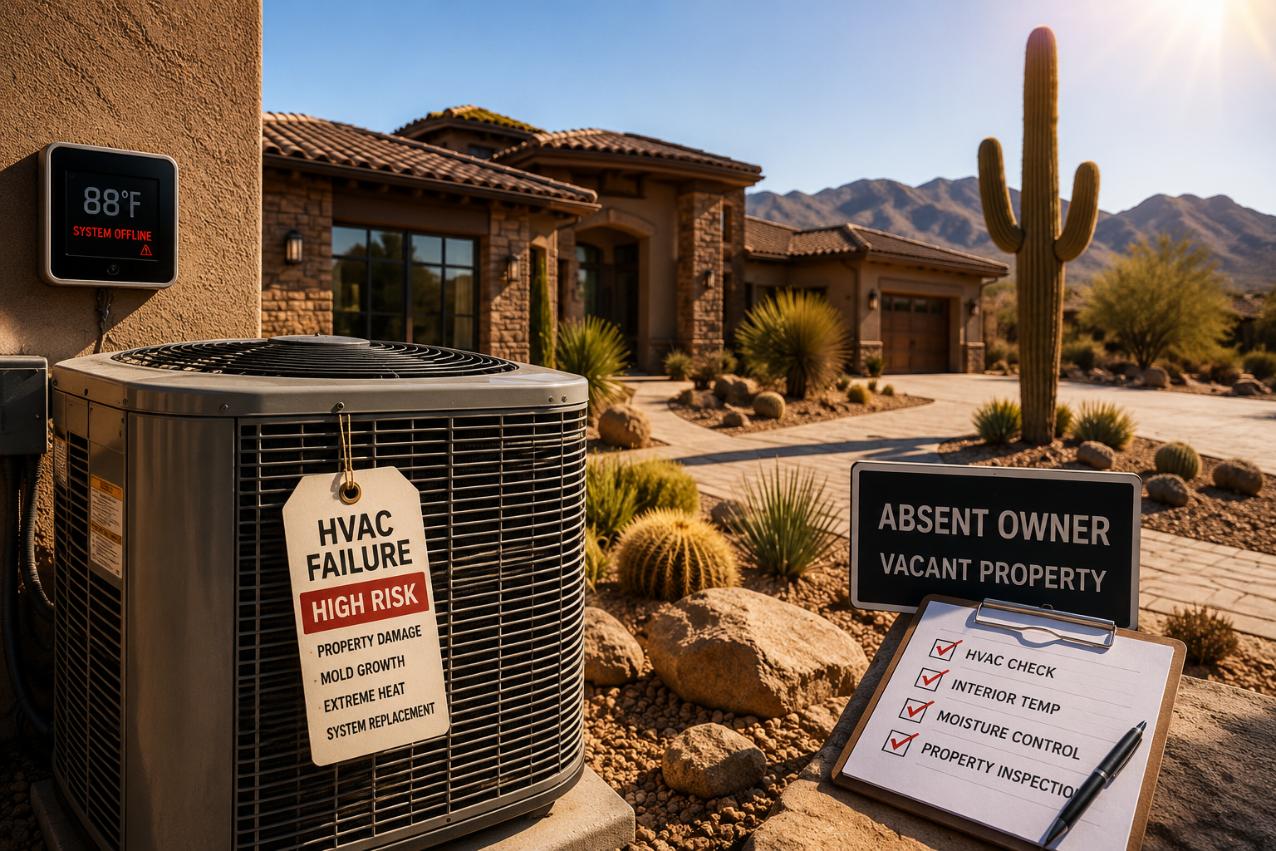
Scottsdale summers leave very little room for HVAC problems, especially when a luxury home sits vacant for weeks or months. A cooling system failure during extreme heat can quickly lead to more than an uncomfortable property. It can create costly maintenance issues, increase security concerns, and make an estate far more difficult to prepare for returning owners or arriving guests.
Quick Answer
Absentee estate owners in Scottsdale face significant risks if an HVAC system fails during summer. Extended periods of extreme heat can damage sensitive electronics, affect interior finishes, increase indoor humidity during monsoon season, and allow small maintenance issues to grow into expensive repairs. Regular property inspections and prompt response to HVAC alerts help reduce these risks.
What Local Readers Should Know
-
Scottsdale regularly experiences summer temperatures well above 100 degrees, placing continuous stress on residential cooling systems.
-
Luxury communities such as DC Ranch, Silverleaf, Gainey Ranch, and Troon North often include custom homes with complex HVAC systems requiring regular monitoring.
-
Monsoon season can introduce power interruptions and storm-related issues that affect air conditioning equipment.
-
Seasonal residents who leave their homes unattended for months benefit from scheduled property checks that can identify HVAC issues before they become larger problems.
Why This Matters Locally
HVAC failures create unique challenges for absentee property owners throughout Scottsdale. Unlike milder climates where an air conditioning outage may simply be uncomfortable, prolonged indoor heat in the Sonoran Desert can affect building materials, furnishings, appliances, and overall property condition.
Luxury homes often contain temperature-sensitive finishes, hardwood flooring, artwork, wine storage, smart home technology, and high-end appliances. Even if major damage does not occur, excessive indoor temperatures can accelerate wear and create maintenance concerns that go unnoticed until owners return.
Elite Pro Concierge helps absentee homeowners protect their Scottsdale estates through regular property monitoring, allowing us to identify developing issues before they become expensive emergencies.
Local Field Observations
Professional property managers throughout the Phoenix metropolitan area commonly observe increased HVAC service calls during the hottest portions of summer. Extended heat waves place continuous demand on cooling equipment, while dust accumulation, aging components, and monsoon-related power interruptions may contribute to unexpected system failures.
Properties left vacant for extended periods often experience delayed discovery because no one is present to notice rising indoor temperatures or unusual HVAC operation.
How HVAC Failure Impacts Vacant Scottsdale Estates
HVAC failure can affect much more than indoor comfort. Extended exposure to extreme temperatures may impact multiple areas of a vacant property.
Potential concerns include:
-
Excessive indoor heat placing stress on electronics and smart home systems.
-
Expansion and contraction of wood flooring and cabinetry.
-
Reduced lifespan of temperature-sensitive appliances.
-
Increased strain on refrigerators, wine coolers, and specialty equipment.
-
Higher utility costs if damaged systems continue operating inefficiently.
-
Delays in preparing the home for owner arrivals or scheduled guests.
Communities throughout North Scottsdale, McCormick Ranch, Paradise Valley, and surrounding Maricopa County neighborhoods often include large custom homes that require ongoing monitoring even while vacant.
Warning Signs an HVAC Problem May Be Developing
The earliest warning signs often appear before complete system failure.
Common indicators include:
-
Unexpected increases in electric bills.
-
Smart thermostat alerts showing rising indoor temperatures.
-
HVAC units running continuously without reaching the target temperature.
-
Warm air coming from supply vents.
-
Water accumulation near indoor air handling equipment.
-
Unusual noises from outdoor condensers.
-
Circuit breakers that repeatedly trip.
-
Inconsistent temperatures between different areas of the home.
These signs are easier to identify when someone performs regular scheduled inspections.
When to Call a Professional
HVAC concerns should be evaluated promptly whenever cooling performance declines during an Arizona summer.
Property owners can safely monitor:
-
Thermostat readings.
-
Smart home alerts.
-
Utility usage.
-
Visible debris around outdoor equipment.
Professional service is appropriate when:
-
Indoor temperatures continue rising.
-
The unit stops producing cool air.
-
Electrical issues occur.
-
Water leaks develop.
-
Unusual mechanical sounds are present.
-
The system repeatedly cycles on and off.
Quick response helps reduce the likelihood that a small repair develops into a much larger maintenance issue.
Common Local Causes of Summer HVAC Failure
Several conditions regularly contribute to cooling system problems in Scottsdale.
Extreme Heat
Extended periods of triple-digit temperatures require HVAC systems to operate for long periods with limited recovery time.
Dust and Desert Debris
Fine desert dust can accumulate on outdoor condensers and restrict airflow, reducing cooling efficiency.
Aging Equipment
Older systems may struggle to maintain performance during prolonged heat waves.
Monsoon Season
Summer storms occasionally produce power fluctuations, debris accumulation, or weather-related equipment issues.
Deferred Maintenance
Seasonal homes sometimes miss annual inspections because owners are away during much of the year.
Prevention and Maintenance
Preventive maintenance remains one of the most effective ways to reduce unexpected cooling failures.
Recommended practices include:
-
Schedule HVAC inspections before summer arrives.
-
Replace air filters on schedule.
-
Keep outdoor condensers clear of vegetation and debris.
-
Test smart thermostats before leaving town.
-
Verify backup power systems if installed.
-
Arrange routine property inspections during extended absences.
-
Respond promptly to HVAC notifications.
For absentee owners, combining HVAC maintenance with professional property monitoring provides additional peace of mind.
Expected Results From Regular Monitoring
Routine inspections cannot eliminate every mechanical problem, but they help shorten the time between equipment failure and corrective action.
Owners can reasonably expect:
-
Faster discovery of HVAC issues.
-
Earlier coordination with qualified repair professionals.
-
Better preparation for owner arrivals.
-
Reduced likelihood that small problems become larger maintenance projects.
-
Improved overall property readiness throughout the summer season.
Common Mistakes
Mistake: Assuming Smart Thermostats Solve Everything
Consequence: Alerts may be missed or delayed if notifications are disabled or internet connectivity changes.
Better Approach: Combine smart technology with scheduled in-person inspections.
Mistake: Skipping Annual HVAC Service
Consequence: Minor wear may go unnoticed until equipment fails during peak demand.
Better Approach: Schedule preventive maintenance before temperatures climb.
Mistake: Leaving Homes Completely Unchecked
Consequence: Small HVAC issues may continue for days or weeks before discovery.
Better Approach: Arrange regular estate monitoring throughout the summer.
Common Local Scenario
A seasonal Scottsdale homeowner leaves for several months after spring. During July, the home’s cooling system stops operating after a component failure. Without scheduled inspections, indoor temperatures climb significantly before the issue is discovered. By the time repairs begin, additional maintenance is needed throughout the property, delaying the owner’s planned return.
While every situation differs, regular property visits can significantly shorten response times when unexpected problems arise.
Related Service Solutions
Several concierge and estate management services help reduce risks associated with unattended luxury homes.
These may include:
-
Routine property inspections.
-
HVAC monitoring during scheduled visits.
-
Vendor coordination.
-
Storm checks after monsoon activity.
-
Arrival preparation.
-
Maintenance scheduling.
-
Emergency response coordination.
Comparing Your Options
| Option | Benefits | Limitations |
|---|---|---|
| Remote thermostat monitoring only | Immediate temperature alerts | No one is available to verify conditions in person |
| Annual HVAC maintenance only | Reduces mechanical issues | Does not monitor the home between visits |
| Regular concierge property inspections | Early detection plus visual inspection | Requires scheduled service |
| Emergency response after failure | Addresses immediate issues | Damage or maintenance concerns may already have developed |
Service Areas
We proudly assist absentee homeowners throughout Scottsdale, including North Scottsdale, DC Ranch, Troon North, Gainey Ranch, McCormick Ranch, and nearby Paradise Valley. We also serve surrounding communities across the northeast Phoenix metropolitan area.
The Cost of Ignoring HVAC Failure
Delaying response to an HVAC failure can increase repair costs, extend downtime, complicate property preparation, and create additional maintenance needs. Arizona’s summer climate leaves little margin for extended cooling outages, making early detection especially valuable for vacant estates.
Frequently Asked Questions
How quickly can an unattended home heat up during a Scottsdale summer?
Indoor temperatures can rise rapidly once cooling stops, especially during periods of extreme outdoor heat. Factors such as insulation, window exposure, and home size all influence how quickly temperatures increase.
Should seasonal homeowners leave the air conditioning running in Scottsdale?
Yes. Most HVAC professionals recommend maintaining a higher but controlled indoor temperature rather than completely shutting the system off. This helps protect the home’s interior while reducing unnecessary system strain.
Does monsoon season affect HVAC systems in Scottsdale?
Yes. Monsoon storms can introduce dust, debris, and occasional power disruptions that affect HVAC equipment. Post-storm inspections help identify potential issues before they worsen.
How often should vacant Scottsdale homes be inspected?
Inspection frequency depends on the property and owner’s preferences. Many absentee homeowners schedule regular visits throughout the summer so developing maintenance concerns can be identified promptly.
Can smart home technology replace property inspections?
No. Smart technology provides valuable alerts but cannot physically inspect equipment, identify visible maintenance issues, or coordinate repairs when needed.
Why are luxury estates at greater risk?
Luxury properties often contain specialty finishes, sophisticated home systems, valuable furnishings, and complex mechanical equipment that benefit from regular oversight during extended vacancies.
Closing
Protecting a vacant Scottsdale estate requires more than locking the doors before leaving town. Regular monitoring, seasonal maintenance, and prompt response to HVAC concerns help preserve the property’s condition while giving absentee owners greater confidence throughout Arizona’s hottest months.
Protect Your Scottsdale Estate All Summer Long
Whether you’re away for a few weeks or an entire season, proactive property monitoring helps reduce surprises and keeps your home prepared for your return.